


Still Working Up the Nerve to Try Backpacking? Read This.

Updated: Jul 19, 2025
Backpacking for the first time can feel thrilling, intimidating, and — let’s be honest — a little terrifying. The idea of carrying everything you need on your back, setting off into the wilderness, and sleeping under the stars sounds romantic... until your brain starts asking questions like: What if I get lost? What if I see a bear? What if I pack the wrong stuff?
If you’ve been dreaming about trying backpacking but haven’t quite found the courage to go for it yet — you are so not alone. I’ve been there. So have most people who now hit the trail with confidence.
The good news? Backpacking doesn’t have to be some extreme, all-or-nothing test of survival skills. You can ease into it, one step (and one night under the stars) at a time. 🌌
Here’s what I wish someone had told me when I was just starting out.
1. You Don’t Have to Go Deep into the Wilderness
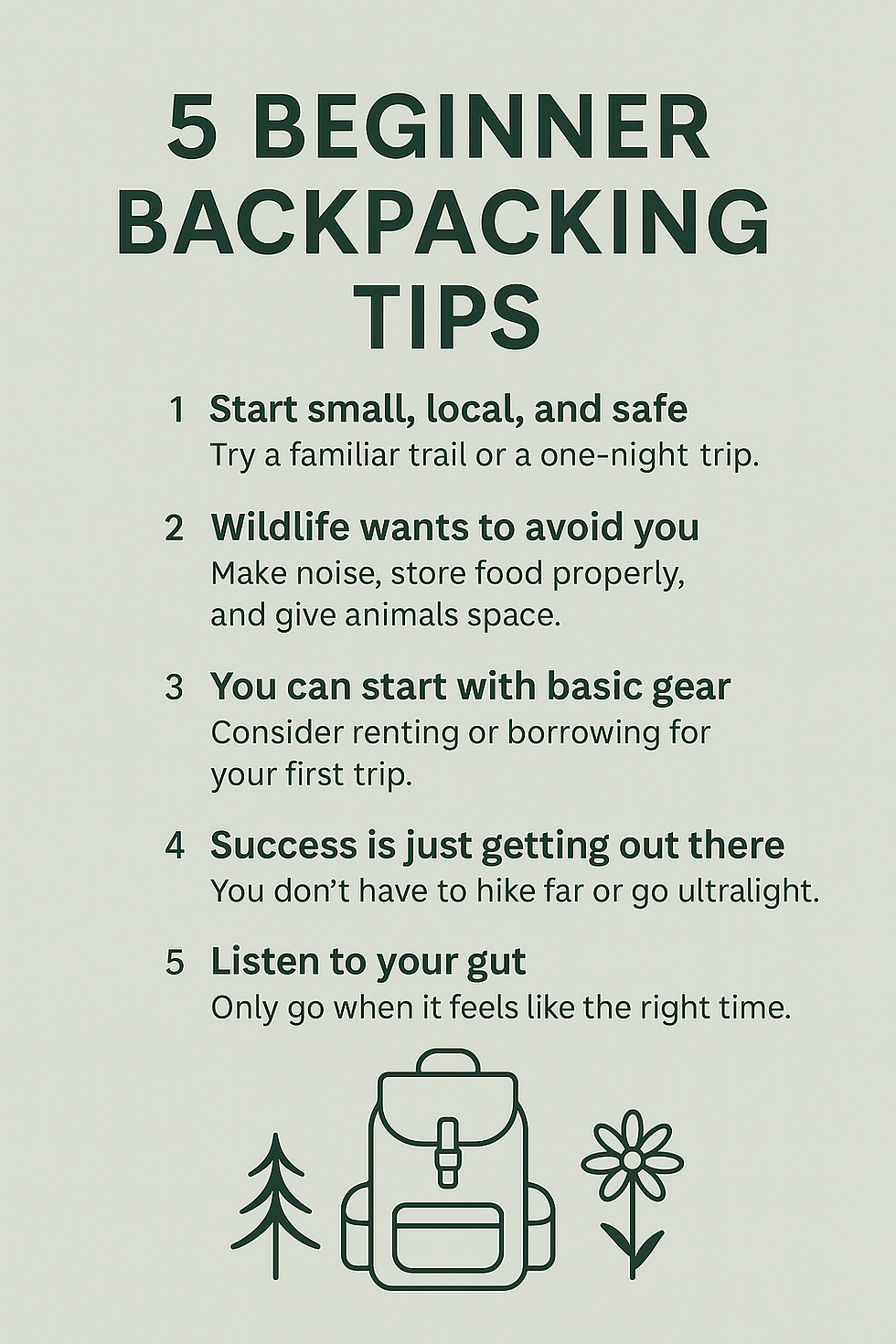
When we picture “backpacking,” we often imagine multi-day treks through remote terrain where you're totally alone, far from help, and surrounded by bears and blisters. In reality, you can start small, local, and safe.
There are tons of beginner-friendly trails near cities, with established campsites, other hikers nearby, and even cell service. Think of your first trip more like “camping with a hike” than “epic survival adventure.” It still counts — and it’s a perfect way to build confidence.
Pro tip: Try backpacking somewhere you’ve already day-hiked before. Familiar terrain helps reduce the mental load of “the unknown,” which is often half the battle.
2. Wildlife Wants to Avoid You Just as Much as You Want to Avoid It
One of the top fears for new backpackers is wildlife — especially bears, snakes, and mountain lions. But here’s something that surprised me when I started: wild animals mostly want nothing to do with you.
They’re not lurking on trails, waiting for their moment. They’re trying to stay safe, just like you. If you:
Store your food properly (use a bear canister or hang it),
Make some noise while hiking,
And give animals plenty of space if you do see them...
...you’ll very likely avoid any issues. In my years of hiking and backpacking, the most common wildlife I’ve encountered are birds, deer, squirrels, and very bold chipmunks. The few times I've seen bears or other scary animals on the trail, they've been perfectly content to amble on by without even looking my way.

3. You Don’t Need Perfect Gear to Get Started
It’s easy to get overwhelmed by gear lists and feel like you need to drop $1,000 just to try backpacking. But you don’t need top-of-the-line gear to have a good experience — especially not at first.
Borrow from a friend. Rent from REI or a local outfitter. Watch YouTube videos to see how things work. A good backpack, decent sleep setup, and proper food storage are great places to start, but you can build up slowly.
And trust me — even experienced backpackers still forget things or pack too much. I've made some downright ridiculous mistakes and nothing has ever ruined a trip for me. It’s part of the process.
4. The Real Win? Just Going
You can start as small (and familiar) as you want. You don’t have to go far. You don’t have to be fast. And your pack doesn’t have to weigh under 15 pounds. You just have to go.
Start with one night. Pick a trail that’s 2–4 miles long. Choose a place where you know there’s water (or pack your own), and don’t be afraid to bail if it doesn’t feel right. You can even do a test run: sleep in your backyard, your car, or a campground with a walk-in site. That’s still valuable experience.
Backpacking is about learning — not performing. Each trip builds trust in your own abilities, teaches you something new, and deepens your relationship with the outdoors. And sometimes, the biggest accomplishment isn’t reaching a summit or finishing a long trail — it’s giving yourself permission to start, even when it feels scary.

5. Listen to Your Gut — and Know When to Stay Home
As important as it is to get in your backpacking reps, backing out of a trip doesn’t mean you failed. In fact, knowing when to pause, postpone, or pivot is one of the most valuable outdoor skills you can develop.
If you’re going just to prove something, or because it’ll “look impressive” to finish — pause. If your gut is saying maybe not this time, trust it. The mountains aren’t going anywhere. Backpacking is meant to be fun (though sometimes Type 2 fun) and will be so much more fulfilling if it’s rooted in excitement and self-trust, not pressure.
I recently canceled a backpacking I had been excited about when I booked it -- then not so much as the date drew nearer. I realized I was mentally and physically exhausted from half marathon training and the thought of spending nearly a week backpacking wasn't bringing me the joy it normally would have.
Cancelling that permit was bittersweet, yet brought me instant relief. That trip is still on my bucket list, I'm just saving it for the right time.
If you’ve been quietly dreaming about backpacking but haven’t made the leap, consider this your nudge. You’re more ready than you think.
Start small. Stay safe. Ask questions. Make mistakes. Laugh at yourself. And don’t forget — it’s okay to be nervous. Courage isn’t the absence of fear. It’s just deciding to take that first step anyway.
I’m cheering for you. And if you ever need help picking a beginner-friendly trail or getting over the mental hump of hitting “go,” my DMs and inbox are always open. 💬
Love this kind of content? Subscribe to my weekly newsletter for outdoor tips, personal stories, and inspiration for your next adventure — straight to your inbox. 🏕️💌
Happy adventuring,
A


Rinjani Trekking Center offers guided treks around Mount Rinjani. The schedule looks organized and balanced.